








What Is The Autism Spectrum Disorder (ASD)?
Autism spectrum disorder (ASD) is a developmental disability caused by differences in the brain.


What Is Autism?
Autism spectrum disorder (ASD) is a developmental disability caused by differences in the brain. Based on studies done by the CDC, autism impacts about one out of 44 children in the US.

There isn't one type of autism but many. Sometimes, they can be altered by different factors in a person's environment or even genetics.
Due to autism being a spectrum disorder, anyone with it has particular advantages and problems that are challenging.

The way people diagnosed with autism take in knowledge, think about the world around them and solve problems may be very intelligent and extremely handicapped.
There are people with ASD that need a large amount of assistance from day to day, but others that require little.
Then there are people with the disorder capable of living entirely independent lives.
Different sets of factors can impact the growth of autism in an individual. This sometimes coincides with medical and sensory problems, like disorders of the stomach and intestines, sleep disorders, seizures, and other mental challenges like depression and anxiety.
Some of the signs of autism typically manifest in children at a young age. The average is two or three years old.

Developmental delays may be noticed earlier than this, even before a child reaches two. Studies indicate that intervention at an early age usually results in better outcomes later in the lives of the autistic.
What Is Autism Caused By?
Autism is not caused by one single thing. There can be many causes. Some of the causes that are known from years of study include factors that are both environmental and genetic.
The genetic causes of autism are usually pinpointed in about 20% of diagnoses at the most and 10% of them at the least. Such cases can be syndromes listed as characteristic to certain individuals or quite rare.
The factors that could lead to a greater risk of autism are low weight in infants, premature birth, and various drugs are taken during pregnancy.
What Is Autism in Kids?
Autism in children is when minors, typically those under 7, are diagnosed by a pediatrician with the disorder. The diagnosis is often characterized by a process involving two steps.

The first step is the general developmental screen. Kids are recommended to get wellness checkups with pediatricians or another relevant doctor.
Most experts advise that kids get screened for developmental disorders beginning at nine months of age. The visits should average every nine months, when possible. They should include screenings for autism. More screenings can be done for children that are at greater risk for autism.
Kids that are at greater risk are those with other family members diagnosed with the disorder, children with parents that are older, and those born with low birth weight.
Other disorders might also indicate autism.
During the screening, the concerns that parents and guardians have played an important part in it.
Doctors usually ask questions concerning children's behaviors, whereby the answer they give is studied alongside information gathered during the screening. Observations can help from some of the conclusions that are reached.
When differences in the way a child behaves are noted by clinicians, it can be grounds for a referral to more evaluations within a specific timeframe.
The second step is where diagnostics are run. Autism is best treated when the disorder is identified in children when they're very young. Knowing that it exists early can also assist therapists in determining the kind of programs and behavioral services that are best for them.

Health experts that work with determining an autism diagnosis in kids work on evaluations as well. They usually form groups, made up of pediatricians and neurologists. Speech pathologists might also be part of the team, along with psychologists specializing in childcare.
Evaluation usually entails the following assessments:
- Reviewing abilities in speech and language
- Reviewing cognitive traits
- Studying the behavior in children
- Talking with people that are close to children, including caregivers and parents
- Reviewing different age-specific skills required to finish day-to-day occupations without assistance, like getting dressed, using the bathroom, and eating food
Due to the complexity of autism, additional evaluation might be assessed, such as hearing and blood tests.
Based on the information gathered in the assessment, an official diagnosis can be reached with suggestions for future medical care.
In older children and teenagers, teachers usually spot autism symptoms before others do.
Evaluations can be done by special education staff at the school, where they give recommendations to parents for more evaluation with their health provider. The caretakers for a child may contact different providers about their problems with sociability and issues with verbal communication.
Older adolescents might experience problems interpreting humor, idioms, and when people are being sarcastic. Friendships can be exceedingly difficult for them, as would forming relationships with the opposite sex.
What Is Autism in Adults?
A successful diagnosis of autism in adults comes with difficulties that usually aren't present in children. In older people, the symptoms can be seen alongside other disorders, like anxiety and ADHD.

When adults notice symptoms of autism, they're recommended to speak with health care providers for additional direction and a thorough evaluation.
Alternatively, they can ask for a referral to a neuropsychologist or psychiatrist, so long as they've worked with autism patients previously. When giving an evaluation, doctors will inquire about the following:
- Problems with the senses
- Behavior patterns that become repetitive
- Different problems regarding the patient's social interactions with people
- Problems with communication
Typical evaluations involve the patient talking with doctors and close loved ones about their medical history. This helps to minimize the likelihood of making an incorrect diagnosis.
Getting the correct diagnosis when screening for autism in adults helps the patient know about previous challenges, pinpoint strengths and weaknesses, and understand the sort of assistance that they need.
Additional research is being conducted to find out the kind of services that best benefit adults with ASD and the behavioral changes they experience between adolescence and early adulthood.
Recent News
Related articles

AHCCCS ABA Therapy: Coverage and Approval in Arizona
AHCCCS ABA therapy covers medically necessary care. Plan rules determine provider access and treatment approval.

How to Coordinate School-Based ABA Therapy in Arkansas
School-based ABA therapy in Arkansas needs shared routines. Team roles and progress notes help explain daily support.

6 Tour Checks for Center-Based ABA Therapy in Arkansas
Center-based ABA therapy in Arkansas varies by provider. A tour helps parents check staff, safety, and progress.

How to Start In-Home ABA Therapy in Arkansas in 6 Steps
In-home ABA therapy in Arkansas begins with intake and a care plan. The steps explain records and the assessment.

6 Arkansas Medicaid ABA Therapy Rules Families Need to Know
Arkansas Medicaid ABA therapy has age, diagnosis and approval rules. Families can check six requirements before care.

Arizona Autism Laws for ABA Coverage and School Rights
Arizona autism laws for ABA coverage vary by plan. Families can check insurance, appeal options, and school rights.

ABA Therapist Salary in Arkansas for RBTs and BCBAs
Compare ABA therapist salary in Arkansas by role. See how paid hours and benefits affect earnings before applying.

5 Autism Support Groups and Family Resources in New Mexico
Autism support groups in New Mexico connect families. Local resources offer events, parent support, and school help.

Where to Get an Autism Evaluation in New Mexico
Autism evaluation options in New Mexico include UNM and NMSU. Age and referral details help parents prepare.

7 North Carolina Autism Resources to Contact Before ABA Therapy Starts
Autism resources North Carolina families can call for diagnosis, early intervention, rights, and parent support. Start ABA intake with Cross River.

Does Indiana Medicaid Cover ABA Therapy? A Parent Checklist
Indiana Medicaid ABA therapy may cover care for eligible children. The checklist covers coaching and renewals.
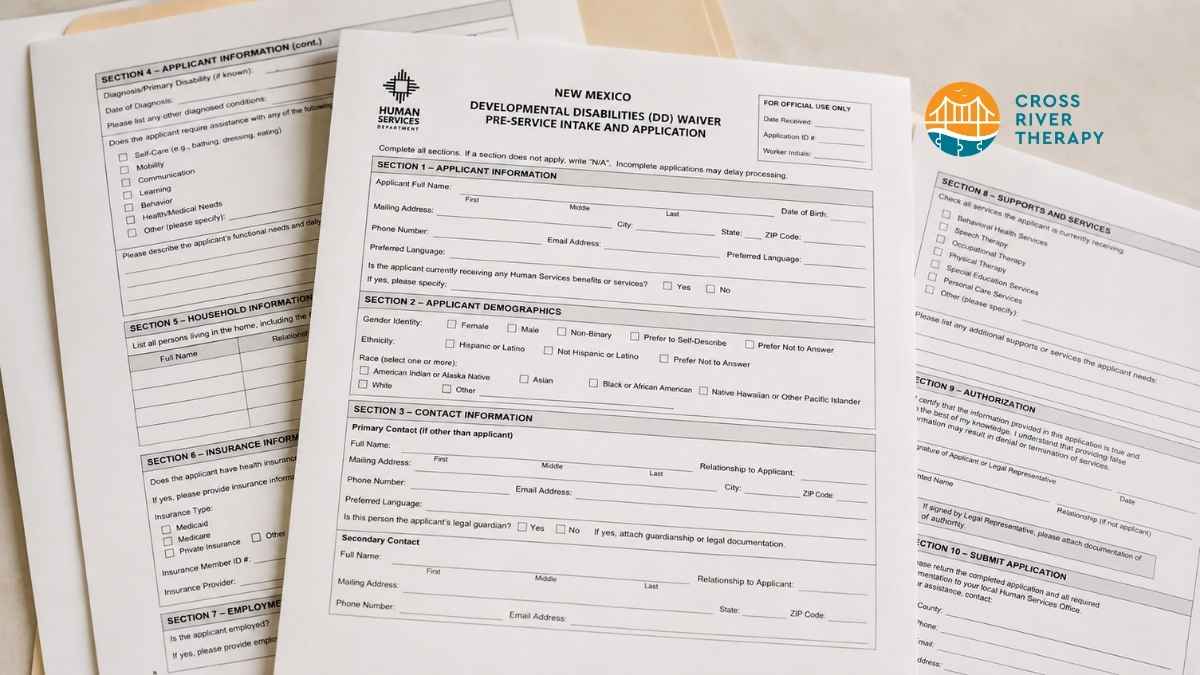
How to Apply for the New Mexico DD Waiver
Your NM DD waiver application starts with state intake. The steps cover records, submission, and enrollment.